Spokane Townhome Development in 2026: How Policy, Infrastructure, and Land Strategy Are Accelerating Mid-Density Growth
Townhome construction in Spokane is entering a new phase in 2026—one driven less by general housing demand alone and more by zoning reform, infrastructure realities, and evolving land strategy.
While Spokane has already seen growing momentum around townhome neighborhoods in recent years, the next stage of this market is increasingly shaped by deeper structural forces:
HB 1110 implementation
Parking reform
Comprehensive planning updates
Sidewalk and frontage requirements
Build-to-rent demand
Rising land efficiency pressures
For developers and builders, 2026 is not simply about whether townhomes are growing—it is about how Spokane’s evolving policy environment is changing where, how, and why townhome projects are becoming more viable.
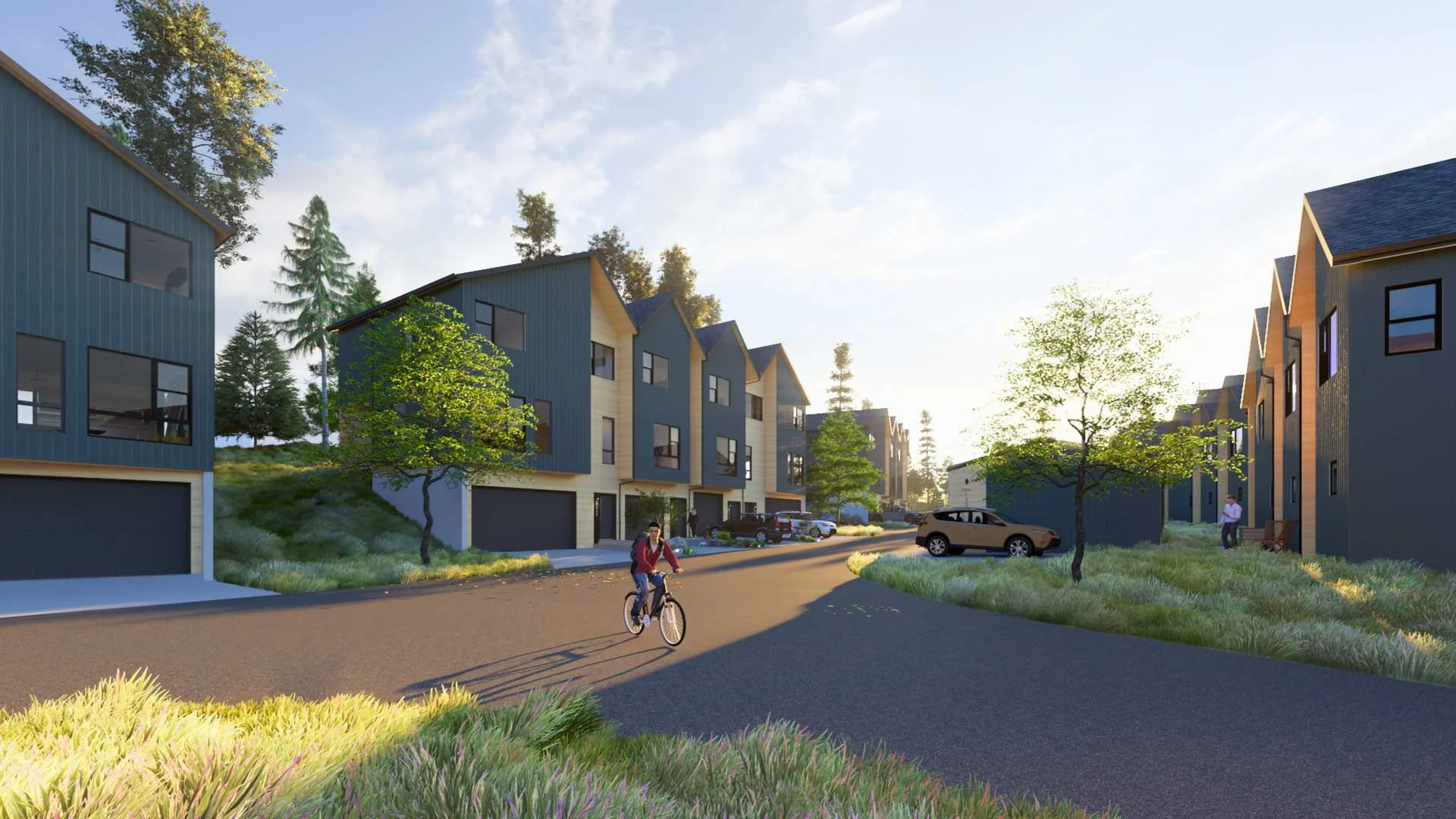
Spokane’s Townhome Market Is Maturing
Earlier townhome growth often centered around affordability and neighborhood demand.
By 2026, the conversation is expanding toward:
Key strategic drivers:
More efficient land utilization
Smaller parcel feasibility
Fee-simple subdivision potential
Mid-density neighborhood expansion
Improved investor flexibility
Regulatory compatibility
This means townhomes are increasingly viewed not just as a housing product, but as a strategic development model.
Zoning Reform Is Expanding Development Possibilities
Spokane’s recent and ongoing reforms—including Building Opportunity for Housing and statewide HB 1110 alignment—are creating broader opportunities for:
Attached housing
Small-lot development
Duplex-to-townhome transitions
Infill redevelopment
Neighborhood-scale density
For many developers, parcels previously limited by outdated zoning assumptions may now support more practical townhome projects.
Parking Reform Is Improving Site Design
Since Spokane’s 2024 citywide elimination of parking minimums, builders have gained more flexibility in:
Site layout
Unit count optimization
Smaller lot planning
Reduced paving costs
Stormwater efficiency
By 2026, these changes are increasingly affecting underwriting, entitlement, and construction models for townhome developments.
Infrastructure Is Becoming a Major Differentiator
As more townhome projects move into active planning, infrastructure obligations are playing a larger role in project feasibility.
Developers must increasingly evaluate:
Sidewalk installation
Road frontage improvements
Utility extension
Stormwater systems
Fire access
Transportation connectivity
In some cases, infrastructure readiness may determine whether a site is economically viable—even when zoning supports density.
Townhomes Fit Spokane’s “Density Without High-Rise” Model
One reason townhomes remain highly attractive is that they support Spokane’s broader growth goals while maintaining neighborhood-scale character.
Townhomes provide:
Higher density than detached homes
Lower complexity than apartments
Consumer-friendly ownership
Stronger suburban compatibility
Better political acceptance in many neighborhoods
This positions townhomes as a practical middle ground.
Build-to-Rent Is Expanding Townhome Relevance
Townhomes are also increasingly important because they work well for:
Build-to-rent communities
Investor-held portfolios
Workforce housing
Phased developments
Mixed ownership strategies
This broadens their appeal beyond traditional for-sale neighborhoods.
2026 Developer Priorities Are Shifting
Developers are increasingly asking:
Can this parcel support fee-simple townhomes?
Will frontage and sidewalk obligations impact margins?
Does local infrastructure align with scalable growth?
Can this project serve ownership, rental, or hybrid models?
These questions reflect a more advanced townhome market than Spokane saw just a few years ago.
Spokane’s Competitive Advantage
Compared to larger metropolitan markets, Spokane still offers:
More accessible land
Expanding policy flexibility
Lower entitlement barriers
Growing housing demand
Strong townhome consumer interest
This may make Spokane one of the Inland Northwest’s more attractive townhome development markets.
Risks Builders Must Manage
Townhome acceleration does not eliminate:
Construction inflation
Utility costs
Infrastructure obligations
Permit timelines
Financing pressures
Community opposition
Execution discipline remains critical.
The Bottom Line
Spokane’s townhome market in 2026 is no longer defined solely by housing demand—it is increasingly driven by smarter land strategy, evolving zoning laws, infrastructure planning, and broader development flexibility.
For developers, investors, and builders, townhomes are becoming one of Spokane’s most practical tools for delivering:
Mid-density housing
Neighborhood-scale growth
Better land performance
Ownership and rental versatility
Scalable residential communities
As policy reforms continue reshaping Spokane’s construction environment, builders who understand how to strategically navigate these changes may find townhome development to be one of the region’s strongest long-term opportunities.