Spokane’s Elimination of Parking Minimums: What It Means for Townhome and Multifamily Builders
When Spokane officially eliminated citywide parking minimum requirements in August 2024, it marked one of the region’s most significant housing and land use reforms in decades.
While Spokane’s broader housing modernization reforms were approved in 2023 and implemented in 2024, the full citywide elimination of parking minimums officially occurred in August 2024. Its larger effects are now becoming more visible as developers plan and adjust projects through 2025 and 2026.
For townhome developers, multifamily builders, and investors, Spokane’s parking reform is not simply a code update. It is a long-term shift in how housing projects can be designed, financed, and scaled.
As broader middle housing reforms and Washington’s HB 1110 implementation continue advancing through 2026, the elimination of parking minimums is becoming a critical factor in Spokane’s evolving development strategy.
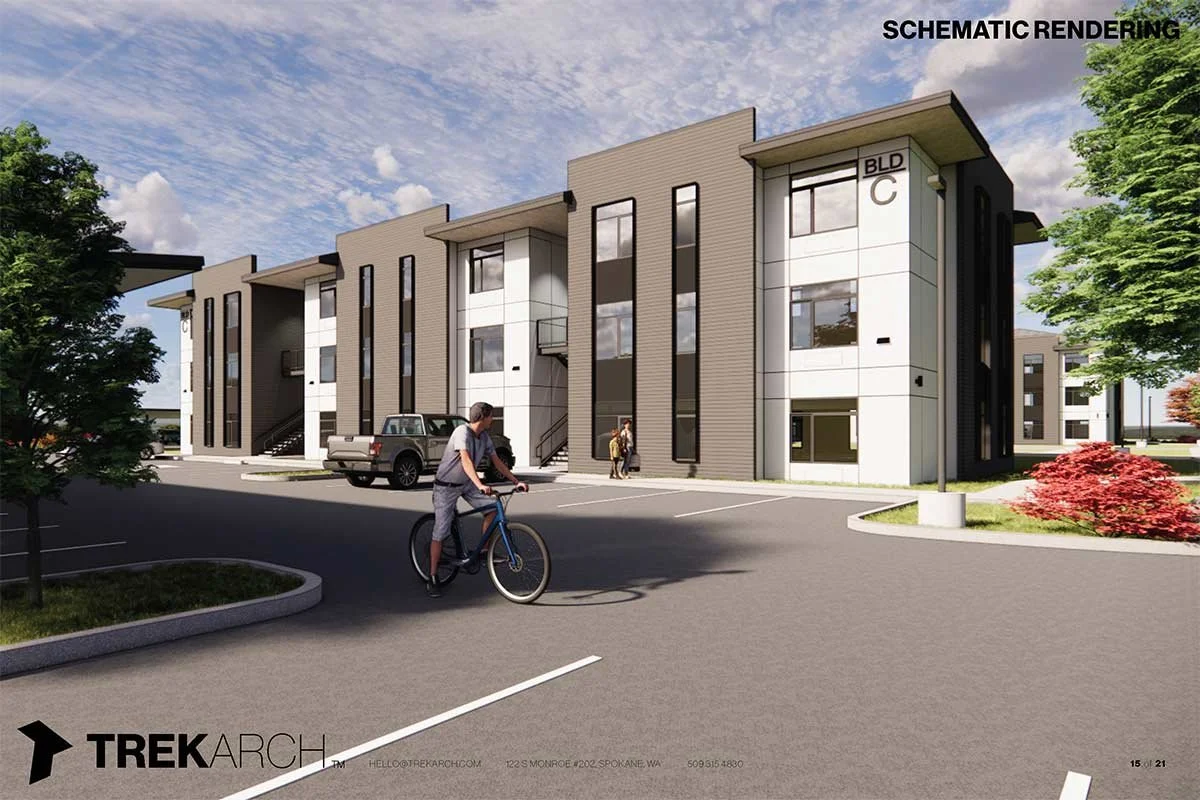
Spokane’s Parking Reform Timeline: Why the 2024 Change Matters More in 2026
2023
Spokane approved broader housing modernization reforms, including earlier parking-related changes near transit corridors, as part of the Building Opportunity for Housing initiative. Many of these updates officially took effect on January 1, 2024.
August 2024
The city adopted full citywide elimination of parking minimums for all land uses.
2025–2026
Developers, investors, and builders are now seeing the broader real-world effects through:
New project feasibility models
Revised site plans
Increased density opportunities
Lower per-unit development costs
Better integration with middle housing reforms
The policy may have started in 2024, but its greatest influence is unfolding through Spokane’s current and future housing pipeline.
What Are Parking Minimums?
Parking minimums are zoning rules requiring developers to build a set number of off-street parking spaces for each project.
Historically, these mandates often increased:
Land consumption
Paving and excavation costs
Stormwater requirements
Construction budgets
Site inefficiency
For many townhome and multifamily projects, mandatory parking ratios reduced the number of units that could realistically be built.
By removing these requirements, Spokane has shifted parking decisions closer to actual market demand rather than fixed zoning formulas.
Developers must still comply with applicable parking design, access, stormwater, and site development standards whenever parking is included within a project.
Why Spokane Eliminated Parking Minimums
Like many growing cities, Spokane has faced increasing pressure around housing availability, affordability, and land use efficiency.
City leaders and planners increasingly viewed mandatory parking requirements as a barrier to new housing development—especially for townhomes, multifamily projects, and infill construction on smaller urban lots.
In many cases, parking mandates required developers to dedicate large portions of valuable land to pavement instead of housing units, open space, or more efficient site layouts.
The reform was also influenced by broader statewide housing initiatives, including Washington’s push for increased density, middle housing expansion, and more flexible zoning policies under HB 1110.
By eliminating parking minimums, Spokane aimed to:
Encourage additional housing production
Improve infill development opportunities
Reduce unnecessary development costs
Support more flexible project design
Modernize zoning regulations for long-term growth
While not every project will reduce parking, the change gives developers more ability to align parking decisions with actual market demand and project needs rather than fixed citywide formulas.
Why This Matters for Townhome and Multifamily Builders
1. Higher Density Potential
Developers can now often:
Fit more units on a site
Improve lot efficiency
Build on smaller parcels
Expand infill opportunities
Increase project scalability
For townhome and build-to-rent communities, this flexibility can materially improve project feasibility.
2. Reduced Construction Costs
Parking infrastructure can significantly increase budgets through:
Excavation
Asphalt
Concrete
Drainage systems
Utility coordination
Structured parking
By reducing unnecessary parking construction, some projects may improve overall site efficiency, development feasibility, and potentially affordability.
3. Better Land Use for Spokane’s Housing Goals
Spokane’s housing shortages have pushed policymakers toward reforms that prioritize housing production over excess parking.
Parking reform supports:
Middle housing
Townhome communities
Multifamily neighborhoods
Build-to-rent developments
Infill housing strategies
What Has Changed Between 2024 and 2026?
2024: Regulatory Opportunity
Developers gained flexibility.
2026: Strategic Implementation
Builders are increasingly using this flexibility to:
Improve underwriting
Reevaluate land acquisitions
Design more efficient projects
Align with HB 1110 density requirements
Create stronger long-term project performance
In short, 2024 changed the rules.
2026 is where developers are learning how to maximize them.
Positive Outcomes Spokane Builders Are Seeing
More Financially Viable Projects
Smaller or previously constrained sites may now support more feasible development opportunities.
Expanded Townhome Feasibility
Townhome communities often benefit substantially from reduced parking burdens.
Stronger Build-to-Rent Potential
Neighborhood-scale rental developments gain improved site efficiency.
Reduced Site Development Complexity
Less paving can also reduce:
Grading challenges
Drainage burdens
Stormwater systems
Long-term maintenance
Investor and Developer Strategy Shifts
Spokane’s parking reform increasingly supports:
Smaller lot acquisitions
Transit-oriented projects
Missing middle housing
Fee-simple townhome communities
Long-term rental portfolios
For developers focused on repeatable housing models, this reform may create additional opportunities for portfolio scalability depending on project type, location, and market demand.
Important Considerations
Parking reform does not eliminate the need for practical planning.
Successful projects still require consideration of:
Buyer expectations
Tenant parking demand
Neighborhood standards
Financing requirements
Lender preferences
Transit access
Developers who balance flexibility with market realities will likely perform best.
Spokane’s Competitive Development Advantage
Compared to cities with stricter parking mandates, Spokane’s code modernization may increasingly position it as an attractive market for:
Housing developers
Multifamily investors
Townhome builders
Build-to-rent operators
As housing demand remains strong, reduced regulatory barriers may improve Spokane’s long-term growth potential.
The Bottom Line
Spokane’s elimination of parking minimums officially began in August 2024, but its biggest impacts are increasingly shaping development decisions in 2025 and 2026.
For townhome and multifamily builders, this reform creates new opportunities for:
Better land efficiency
Lower development costs
Higher density potential
Improved project feasibility
Expanded housing production
For builders and developers who understand how to strategically adapt, Spokane’s parking reform is becoming far more than a zoning change—it is emerging as a meaningful competitive advantage in one of Eastern Washington’s evolving housing markets.