Spokane Construction Inspections: What Actually Happens and Why They Matter
Construction inspections are a required part of every commercial building project, but they are often misunderstood. From the outside, an inspection may look like a quick site visit or a reason for a temporary pause in work. In reality, inspections play a critical role in ensuring that a project is built safely, correctly, and in compliance with local regulations.
In Spokane, inspections are part of a structured process that happens throughout construction—not just at the end. Understanding how inspections work helps explain both the pace of construction and the importance of each phase being completed correctly.
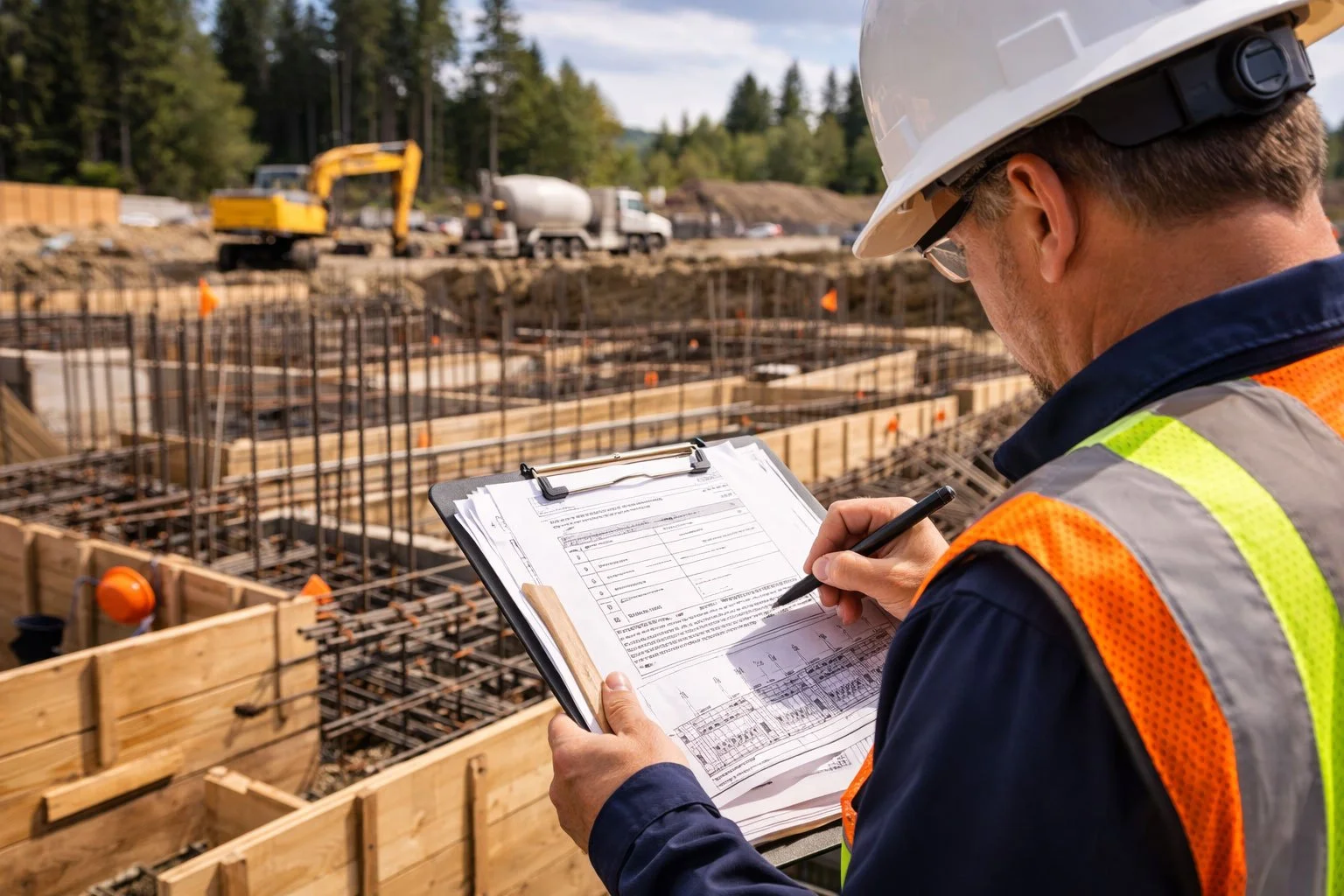
What Construction Inspections Are
Construction inspections are formal reviews conducted during specific stages of a project to verify that the work meets approved plans, building codes, and safety standards.
In Spokane, inspections are typically performed by the City of Spokane Building Services or other local authorities depending on the project location.
Inspectors review completed work at key milestones before construction can move forward to the next phase.
When Inspections Happen During a Project
Inspections are scheduled throughout the construction timeline, not just at completion. Each inspection corresponds to a specific phase of work.
Common inspection stages include:
Site and erosion control inspections before major earthwork begins
Underground utility inspections before trenches are backfilled
Footing and foundation inspections before concrete is poured
Framing inspections after structural work is completed
Mechanical, electrical, and plumbing (MEP) inspections during rough-in
Insulation and energy compliance inspections
Final inspections before occupancy
Each stage must typically be approved before the next phase of work can proceed.
What Inspectors Actually Look For
During an inspection, the goal is not just to “check a box.” Inspectors verify that construction aligns with both the approved plans and applicable building codes.
This may include reviewing:
structural components such as footings, rebar, and framing
proper installation of utilities and drainage systems
compliance with electrical and plumbing codes
fire safety and life-safety systems
energy code requirements such as insulation and air sealing
Inspectors are focused on safety, performance, and compliance—not construction speed.
Why Inspections Can Affect Construction Timelines
Inspections are one of the most common reasons construction projects experience short pauses in visible activity.
This happens because:
work must reach a specific stage before inspection can be scheduled
inspections must be approved before work continues
corrections may be required before approval
In busy construction seasons, scheduling availability can also influence timing. While a site may appear inactive during this period, the project is often waiting for the required approval to move forward.
These pauses are built into construction schedules and are a normal part of the process.
What Happens If Something Doesn’t Pass Inspection
If an inspection identifies an issue, it does not mean the project has failed—it means adjustments are needed before moving forward.
Common outcomes include:
minor corrections that can be addressed quickly
re-inspection after adjustments are made
clarification of plans or installation details
This process helps prevent larger issues later in construction, when corrections would be more complex and costly.
Why Inspections Matter for Long-Term Performance
Construction inspections are not just about meeting requirements—they directly impact how a building performs over time.
Proper inspections help ensure:
structural stability and safety
correct installation of critical systems
long-term durability of materials
compliance with energy efficiency standards
Without inspections, small errors could lead to significant issues after the building is completed.
Inspections and the Construction Process
Inspections are integrated into construction scheduling from the beginning. Contractors plan work around inspection milestones to keep the project moving efficiently.
This coordination includes:
preparing work for inspection
scheduling inspections in advance
sequencing trades based on approvals
coordinating corrections if needed
Understanding this process helps explain why construction does not always move continuously day to day.
Why Inspections Are Essential to Every Project
Construction inspections are a key part of delivering a safe and reliable building.
While they may sometimes slow visible progress, inspections ensure that each phase of construction meets the required standards before the next stage begins.
In Spokane and similar markets, inspections are not an obstacle to construction—they are a critical part of building projects that perform as intended for years to come.